
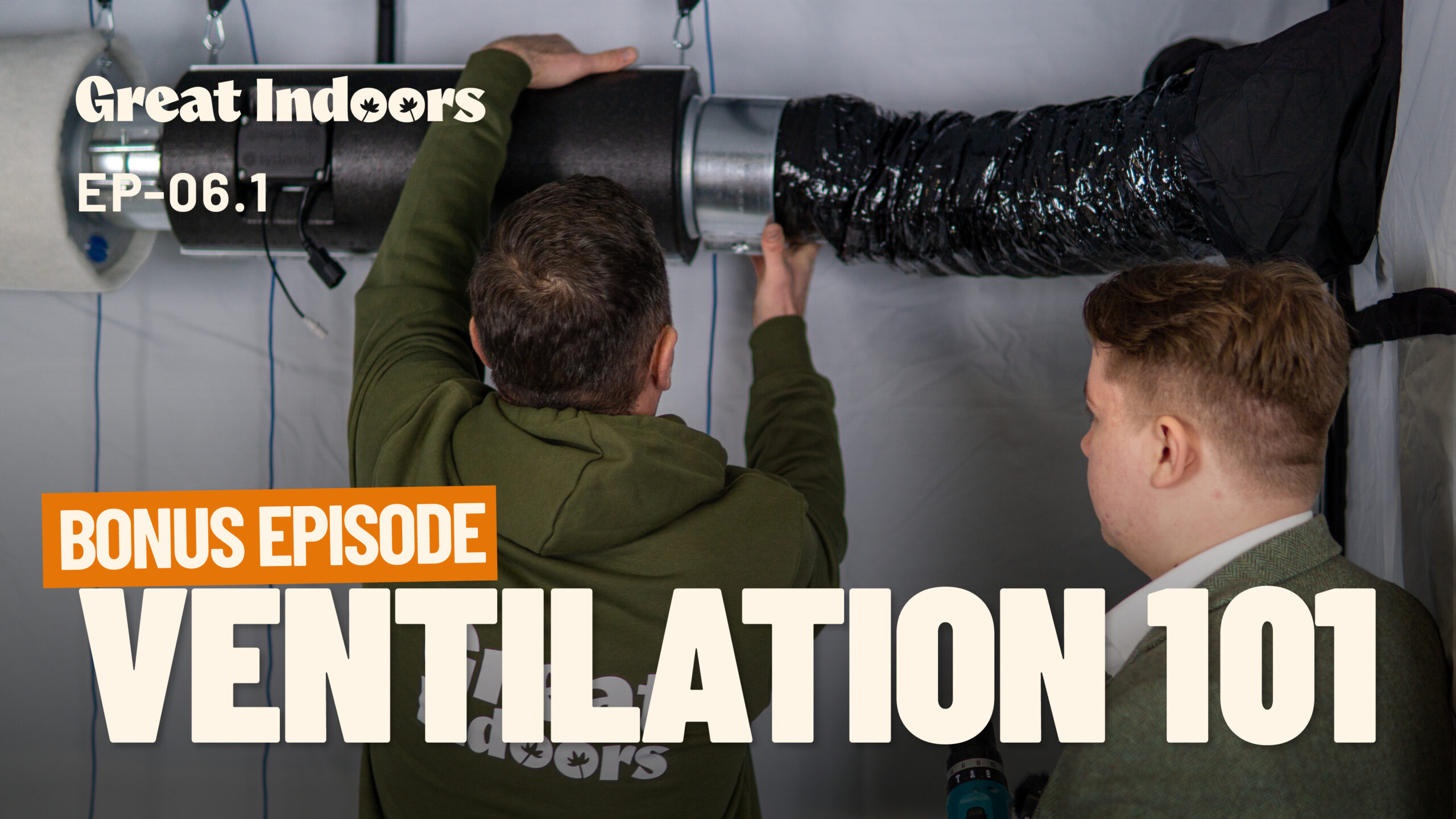
S01E06.1 – Ventilation 101
What Is Ventilation?
Ventilation is responsible for controlling the environment inside your grow room. By removing warm, stale air and replacing it with fresh, cooler, CO₂-rich air, it helps regulate temperature, humidity and airflow to create the ideal conditions for healthy plant growth.
Ian recommends exhausting stale air as far away from the grow room as possible to prevent it being drawn back into your ventilation system.
Why Ventilation is really important
Controls Your Environment
A well-designed ventilation system helps maintain stable temperatures, regulate humidity and keep fresh air moving throughout your grow space. Creating a consistent environment reduces stress on your plants and supports healthy development from seedling to harvest.
Fresh Air Exchange
As warm, stale air is extracted from the grow room, it’s replaced with fresh, cooler, CO₂-rich air. This continuous exchange helps maintain the ideal conditions for healthy plant growth while preventing heat from building up inside the tent.
Supports Healthy Growth
Plants perform best in a stable environment. Consistent airflow, balanced temperatures and regular fresh air exchange all contribute to stronger, healthier plants throughout the entire grow cycle.
Odour Control
When paired with a correctly matched carbon filter, your ventilation system removes unwanted odours before air leaves the grow space. This helps keep your grow discreet while maintaining efficient airflow.
I think this is more in keeping with the rest of your bonus content. Each section is still quick to read, but it feels more like you’re explaining a concept rather than listing features.
Things To Consider
Choose Your Lights First
Always select your lighting before choosing your ventilation. Different lighting technologies produce different amounts of heat, so your extraction system should be matched accordingly.
Don’t Fight Humidity With Extraction
Increasing fan speed may reduce humidity, but it also lowers temperature. Ian recommends using a dehumidifier when humidity needs controlling, allowing your ventilation system to do the job it was designed for.
Review Your Ventilation When Changing Lights
Switching from HPS to LED usually reduces the amount of heat your grow produces. If your fan is oversized for the new setup, it may no longer operate efficiently.
Passive vs Active Intake
Passive Intake: The most common method used in grow tents. As the extraction fan removes stale air, fresh air is naturally drawn in through the tent’s intake vents. This creates a slight negative pressure, ensuring all outgoing air passes through the carbon filter rather than escaping through gaps or zips.
Active Intake: uses a second fan to push fresh air into the grow room while the extraction fan removes stale air. It provides greater control over airflow but requires both fans to work together, often using an environmental controller.
Fan & Filter Matching
Choosing the correct fan and carbon filter is just as important as choosing the right lighting.
Ian recommends running your fan and filter at around 70% capacity or above to maintain efficient airflow and effective odour control. If your fan spends most of its time running much slower than this, it’s often a sign that a smaller fan and filter would be better suited to your grow.
As a general guide, Ian recommends allowing around 600m³/h of extraction capacity for every 1000W of lighting, although factors such as tent size, room temperature and lighting technology should always be taken into account.
Ian’s Verdict
Good ventilation is about more than simply moving air. By matching your fan and filter to your lighting, maintaining efficient airflow and creating the right balance of fresh air exchange, you’ll build a healthier, more stable environment that supports your plants throughout every stage of the grow.


