
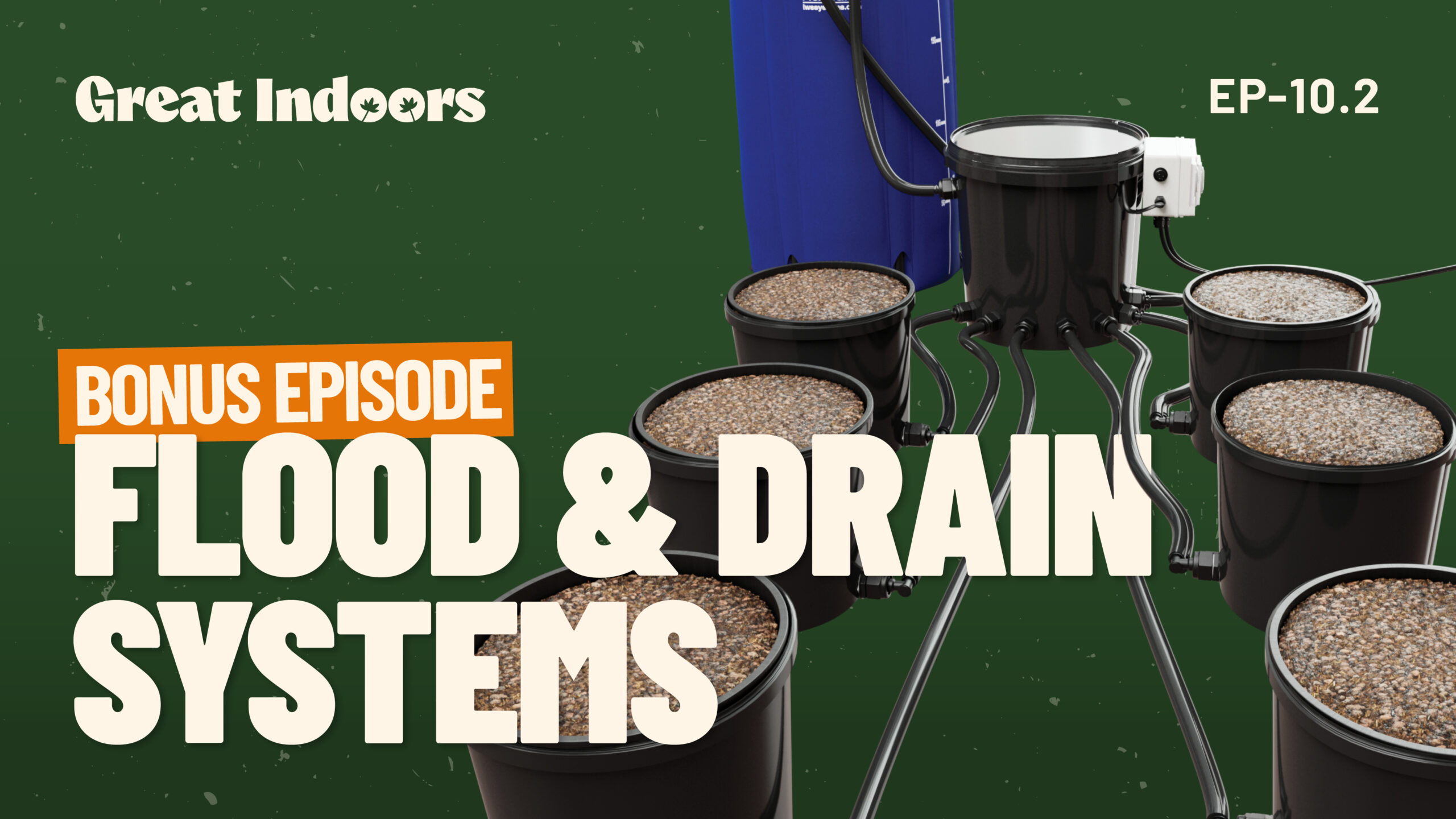
S01E10.2 Flood & Drain
Automated Feeding from Below
Also known as ebb and flow, flood and drain systems automate feeding by periodically flooding the pots with nutrient solution before draining it back into the reservoir.
This gives the plants access to the water and nutrients they need without leaving them permanently sitting in the solution.

How It Works
A reservoir holds the nutrient solution, while a brain and timer control when the system floods and drains. Each pot is connected individually, allowing problems with a single pot to be dealt with without taking the entire system out of action.
As the system drains, stale air is pushed out of the root zone and fresh, oxygenated air is drawn back in.
Ian recommends changing the reservoir every one to two weeks so plants continue receiving fresh nutrients.
Advantages
Automated Feeding
Choose how many feeds your plants receive each day and let the system take care of the process.
Great for the Roots
The flood and drain cycle helps replace stale air around the roots with fresh, oxygenated air.
Scalable
Systems can be configured from around 6 to 48 pots, making them suitable for different-sized grows.
Less Time in the Grow Room
Once set up correctly, Ian says you may only need to go into the grow room every two to three days.
Modular
Individual pots can be dealt with separately if a problem develops.
Things To Consider
Recirculating Nutrients
The nutrient solution returns to the reservoir after feeding. As plants take up different nutrients, the EC can rise and the balance of the remaining solution can change.
Ian combats this by topping up with half-strength nutrients between reservoir changes.
Growing Media
Ian recommends Gold Label 60/40 for this type of system.
Featured Products

IWS Flood & Drain Standard

IWS Flood & Drain Standard Remote

IWS Flood & Drain Pro Remote
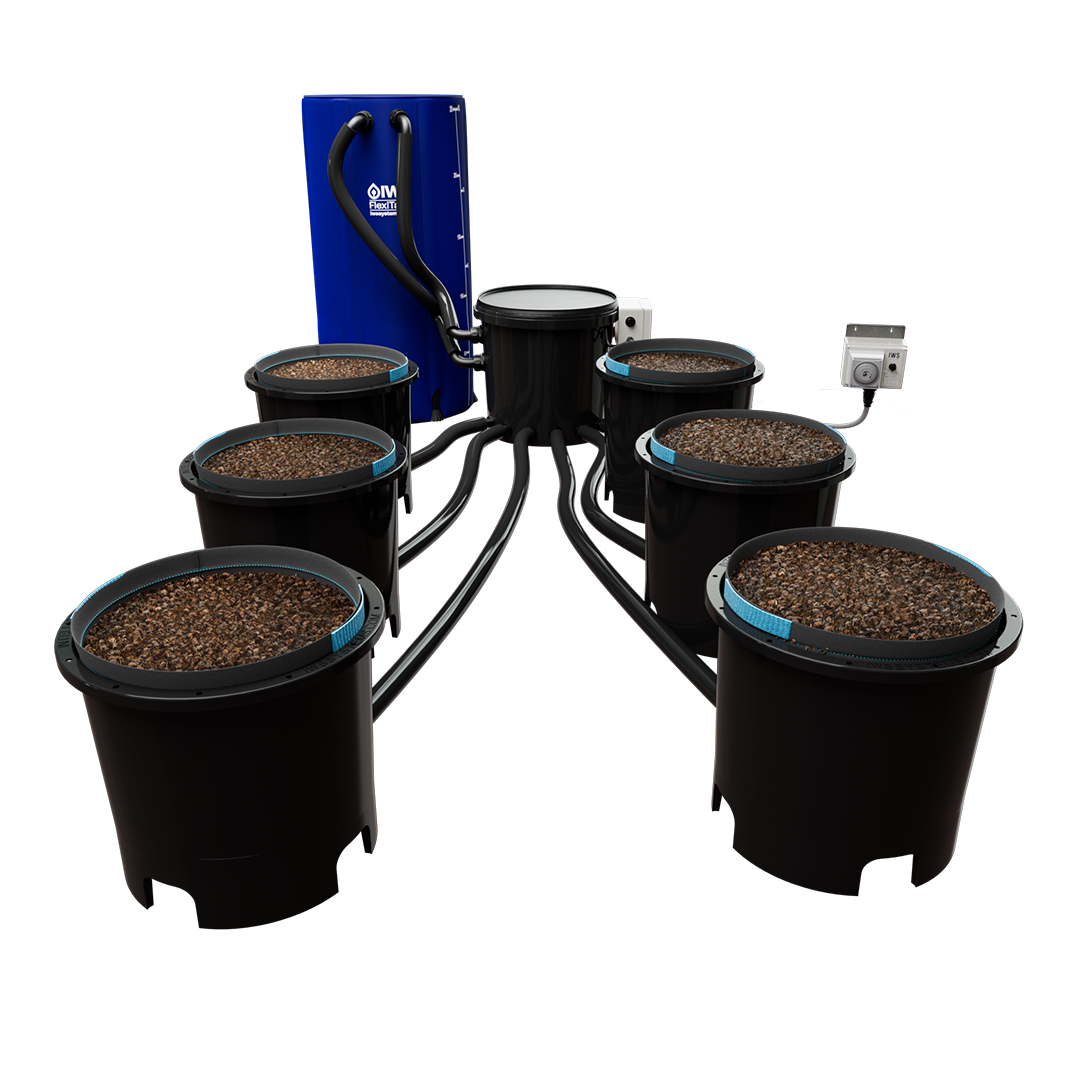
IWS Flood & Drain Trident
Ian’s Verdict
Flood and drain is a great step into automated growing. It reduces the amount of manual feeding required while still giving you control over how often your plants are fed.


