

S01E10.3 Dripper
Precision Feeding
Dripper systems deliver nutrient solution from a reservoir directly into individual pots. They offer much more control over feeding, but Ian recommends gaining some growing experience first — getting the timing wrong can make it easier to under or overfeed your plants.

How It Works
A pump creates pressure that moves nutrient solution from the tank through pipework to a dripper manifold and then through individual dripper lines into each pot.
The systems tested by Ian maintain consistent pressure across setups of up to 48 pots, helping deliver an even flow across the system.
Dripper Types
Flood Drippers
Black flood drippers have no restriction, allowing a larger volume of nutrient solution through quickly. Ian recommends using these with a seconds timer to give you precise control and avoid overwatering.
Pressure-Compensated Drippers
Antelco pressure-compensated drippers restrict the flow to around 2 litres per hour, allowing feeds to be controlled using a minute timer.
Imperium Timer
The Imperium Timer can operate in both minutes and seconds, making it suitable for either approach.
Advantages
Fine-Tuned Feeding
Experienced growers can closely control how much and how often individual plants are fed.
Run to Waste
Used as a run-to-waste system, spent nutrient solution isn’t returned to the reservoir.
Individual Feeding
Nutrient solution is delivered directly to each pot.
Things To Consider
Keep it Clean
Filters, pipes and drippers need to be kept clean to prevent blockages. High environmental temperatures can also increase the risk of drippers blocking.
Ian recommends using a drip-cleaning product, with options available from House & Garden and Plant Magic.
Choosing Your Media
Dripper systems can be used with soil, coco, perlite and other growing media. Pebbles can also be used, although Ian notes that they can result in more nutrient waste when running to waste.
Featured Products

IWS Dripper Standard
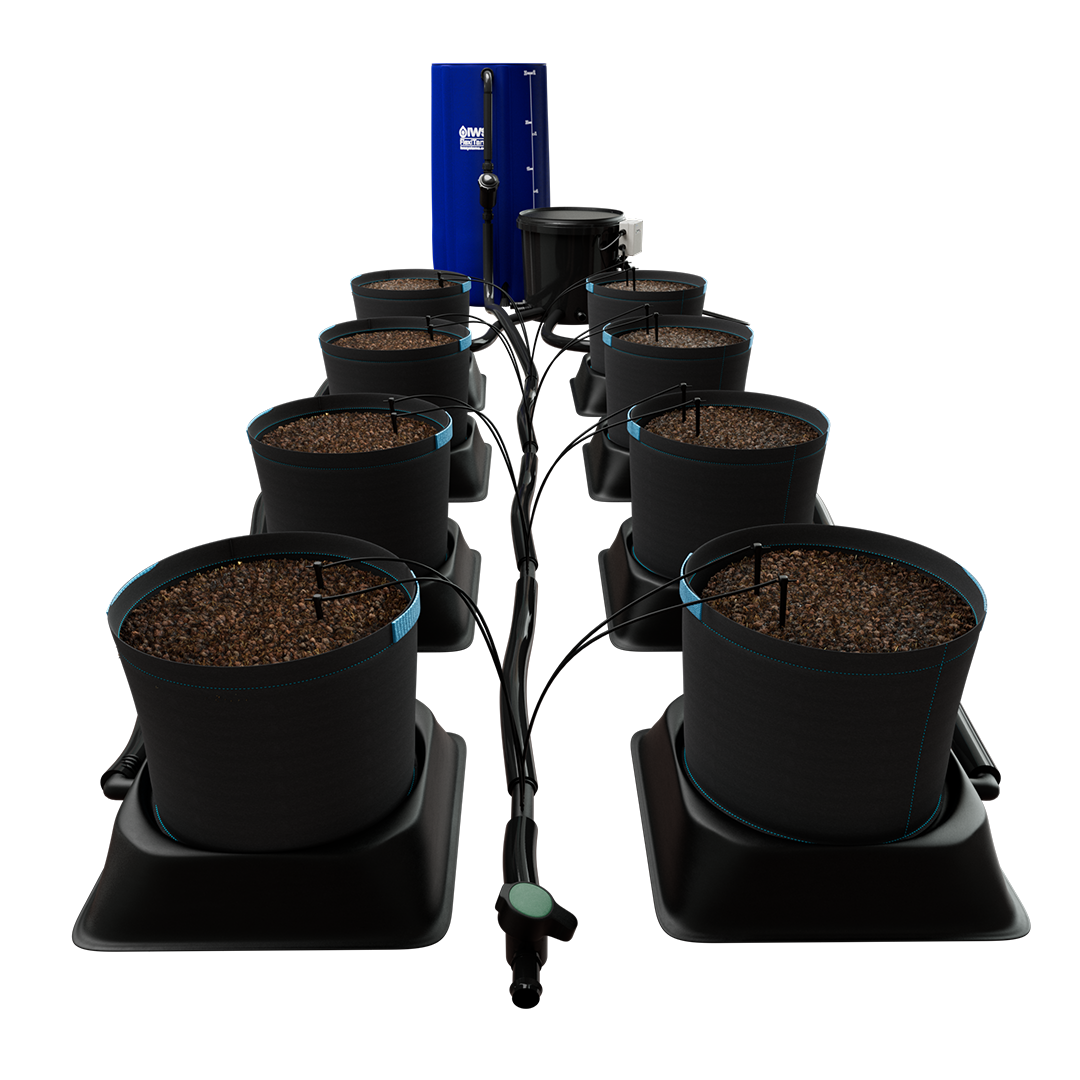
IWS Dripper Pro

Origin Drip Irrigation Systems
Ian’s Verdict
Dripper systems are better suited to experienced growers who can read their plants and understand concepts such as dry back. Learn the feeding process first, then use drip irrigation to fine-tune it.


